Ténéréite (typical)*
(CR [2000], CR-like [2002], CR-an [2006], Primitive achondrite in MetBull 105 [2017])
(carbonaceous chondrite-related)
Found March 2000
20° 45.8' N., 10° 26.5' E.
A single mass of 3,636 g was found by a German team in the Ténéré region of the Sahara Desert in north-central Niger, specifically at a location known as Grein. Provisionally named Te-1 (also associated with the name Grein 004), it was classified by J. Otto and A. Ruh (Universitat Freiburg) as a metal-rich, coarse-grained, primitive achondrite. The meteorite has a recrystallized texture with 120° triple-junctions. Olivine grains are mostly 0.1–0.4 mm in size, but larger grains occur. Large poikilitic pyroxene grains are present, as well as small agglomerates of crystals, sometimes called "Sammelkristalle", which usually form during melting and recrystallization processes. Unlike chondrules, these structures are composed primarily of plagioclase poikilitically enclosing minor olivines and pyroxenes, and are often accompanied by FeNi-metal. Te-1 is a freshly fallen meteorite with a weathering grade of W0, and it has a shock stage of S1–2.
*Previously, Floss (2000) and Patzer et al. (2003) proposed that the acapulcoite/lodranite meteorites should be divided based on metamorphic stage:
primitive acapulcoites: near-chondritic (Se >12–13 ppm [degree of sulfide extraction])
typical acapulcoites: Fe–Ni–FeS melting and some loss of sulfide (Se ~5–12 ppm)
transitional acapulcoites: sulfide depletion and some loss of plagioclase (Se <5 ppm)
lodranites: sulfide, metal, and plagioclase depletion (K <200 ppm [degree of plagioclase extraction])
enriched acapulcoites (addition of feldspar-rich melt component)
A similar distinction could be made among the winonaites in our collections, as well as among members of the newly proposed group ténéréites (Agee et al., 2020). One of the most "primitive" members identified in this new group is NWA 7317, which contains relict chondrules comparable to a petrologic type 6 chondrite. However, most ténéréites have experienced more extensive thermal metamorphism involving incipient melting and now exhibit highly recrystallized textures, characteristics analogous to the "typical" acapulcoites. Metamorphic progression in other ténéréites involved higher degrees of partial melting and even separation of a basaltic fraction (e.g., NWA 011 pairing group). Samples representing such an advanced metamorphic stage are known as lodranites in the acapulcoite/lodranite metamorphic sequence, while the term "evolved" could be used to represent a similar metamorphic stage in the ténéréite group.
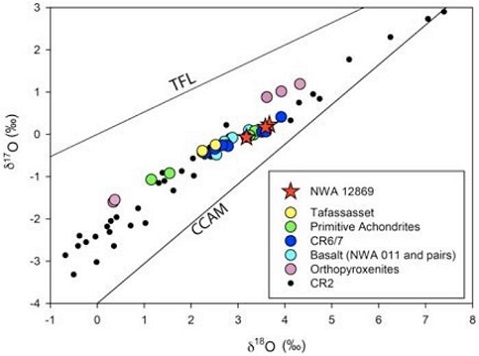
This primitive achondrite has a chemical and mineral composition unlike that of any other meteorite. It has an O-isotopic composition distinct from any other achondrite group, plotting within the CR-field, and interestingly, very near to that of the ungrouped basaltic meteorite NWA 011. Oxygen isotopes are similar to those of the acapulcoite–lodranite parent body but are not an exact match. The mineral composition and noble gas content of Te-1 are very similar to that of the brachinites and the brachinite-like meteorite Divnoe; moreover, the olivine and pyroxene compositions are nearly identical to those of Brachina. In addition, the composition of chromite and metal in Te-1 is indicative of a very close relationship with Divnoe. At the time of its classification, these varied characteristics were considered to be most consistent with the grouping of Te-1 as a brachinite-like primitive achondrite.
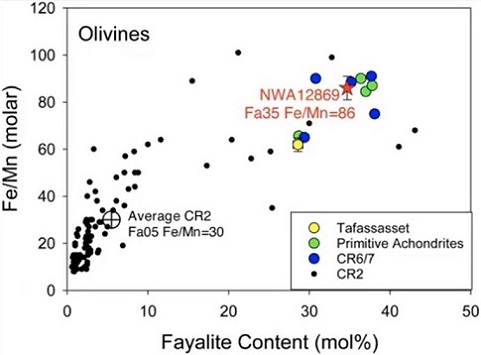
It was asserted by Agee et al. (2020) that the similarity in O, Cr, and Ti values among the CR2 carbonaceous chondrites and these ungrouped equilibrated meteorites is coincidental, and that significant geochemical differences (e.g., olivine Fa content and Fe/Mn) and other discrepancies (e.g., petrologic type discontinuity) exist that make a common parent body untenable. They contend that the thermally metamorphosed CC meteorites represent a unique group for which they propose the name 'ténéréites' (see list and diagrams below).
Diagram credit: Agee et al., 51st LPSC, #2292 (2020)
'Northwest Africa 12869: Primitive Achondrite From the CR2 Parent Body or Memeber of a New Meteorite Group?'
Diagram credit: Dr. Carl Agee, IOM Seminar Sept 1, 2020
'Dr. Carl Agee: Some New Meteorites from the Sahara Desert'
Ma et al. (2021) and Neumann et al. (2021) investigated the suite of ténéréites, for which they proposed the name 'tafassites'. They employed numerical modeling to constrain the formation and thermal history of the parent body, which they found was most consistent with an accretion age of 0.9 (±0.1) m.y. after CAIs—significantly earlier than that of the CR chondrite parent body at 3–4 m.y. after CAIs. In addition, they determined the diameter of the tafassite parent body to be 200–400 km. Moreover, based on stable isotope systematics and the distinct accretion ages obtained for NWA 011 and NWA 6704 of 1.5 and 1.7 m.y. after CAIs, respectively, they argued that these meteorites derive from one or more additional parent bodies. At the other end of the lumping–splitting spectrum, Jiang et al. (2021) contend that the CR parent body once comprised all of the meteorites that are isotopically and geochemically similar, composing a now disaggregated, at least partially differentiated body with a core, achondritic mantle, and chondritic crust (see schematic illustration below).
Schematic illustration credit: Jiang et al., 84th MetSoc, #6062 (2021)
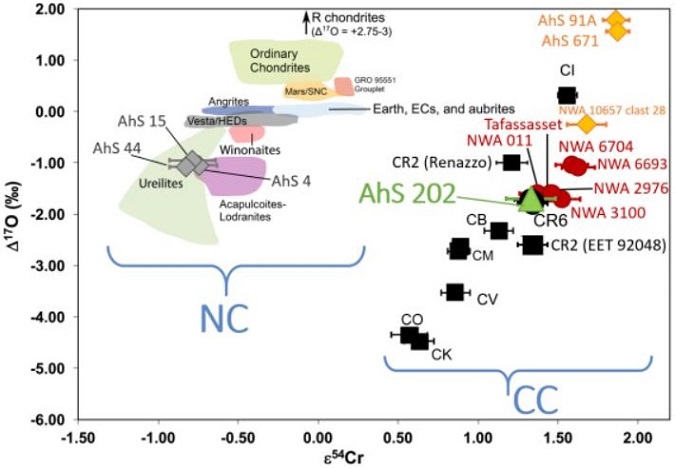
Miller et al. (2021) utilized a coupled ε54Cr vs. Δ17O diagram (see diagram below) to determine the genetic provenance of the ungrouped carbonaceous chondrite AhS 202, which was found as a xenolithic clast in the Almahata Sitta polymict ureilite. Based on its plot, AhS 202 could represent the unmelted chondritic lid surrounding a Ceres-sized (~640–1,800 km-diameter as indicated by evident prograde metamorphism involving the amphibole tremolite [Hamilton et al., 2020; Hamilton et al., 2021; Dodds et al., 2022 {#2158}]) differentiated asteroid, possibly associated with the early-formed (i.e., prior to CR chondrule formation at ~3.8 m.y. after CAIs) ténéréite group (Agee et al., 2020). Alternatively, AhS 202 may derive from an asteroid that formed in the CR reservoir and was previously unrepresented in our collections. Interestingly, the tremolite-bearing C1-ung chondrite MIL 090292 may be a second sample from the same parent body (Hamilton and Goodrich, 2023 #6137).
ε54Cr vs. Δ17O Diagram for AhS 202
click on image for a magnified view
Diagram credit: Miller et al., 52nd LPSC, #2360 (2021)
'Stalking a Large Carbonaceous Chondrite Asteroid Using ε54Cr–Δ17O Isotope Systematics of the Unique Xenolith Almahata Sitta 202'
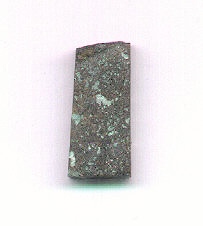
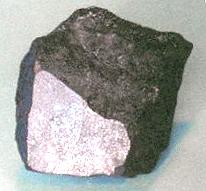
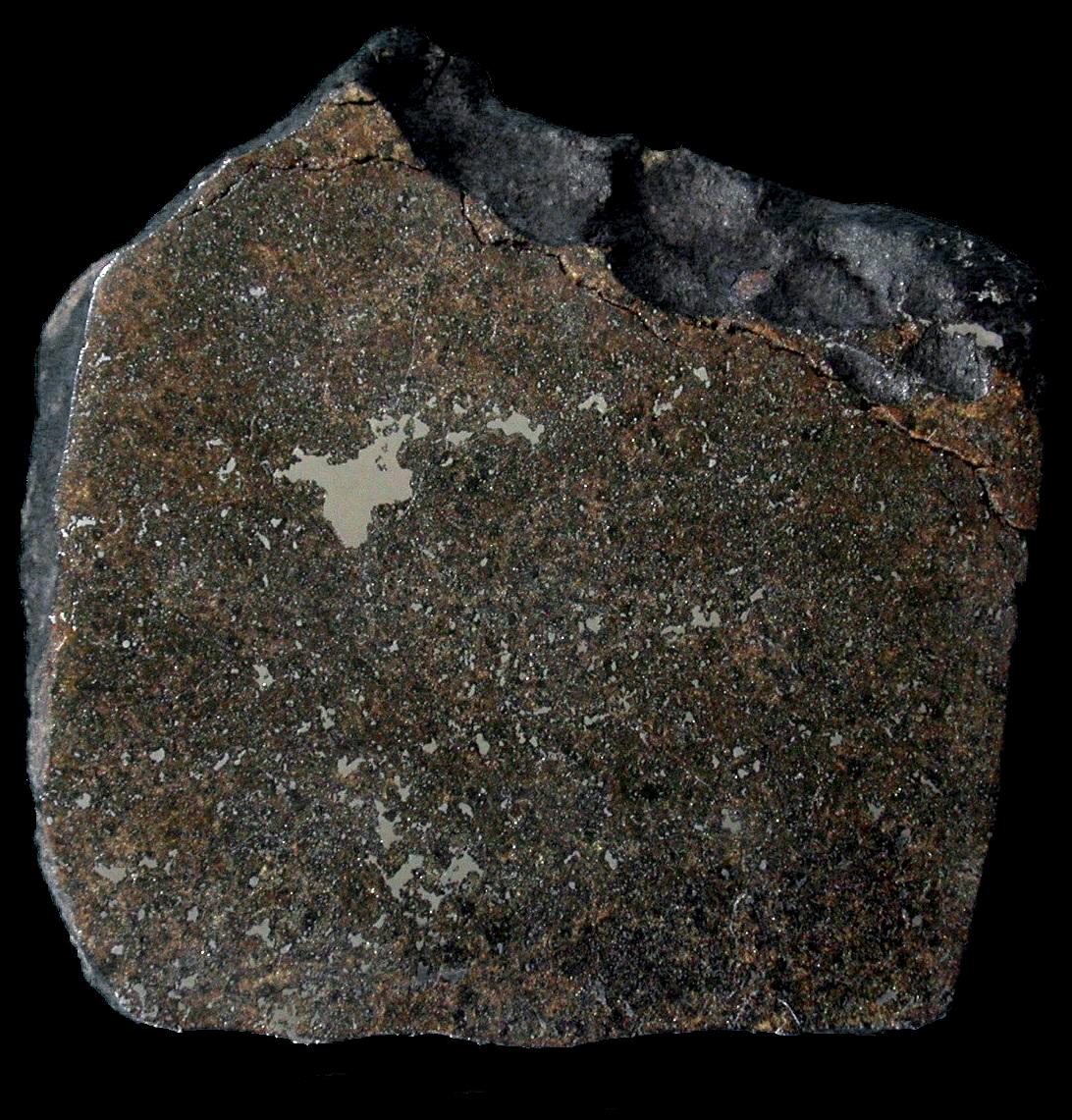
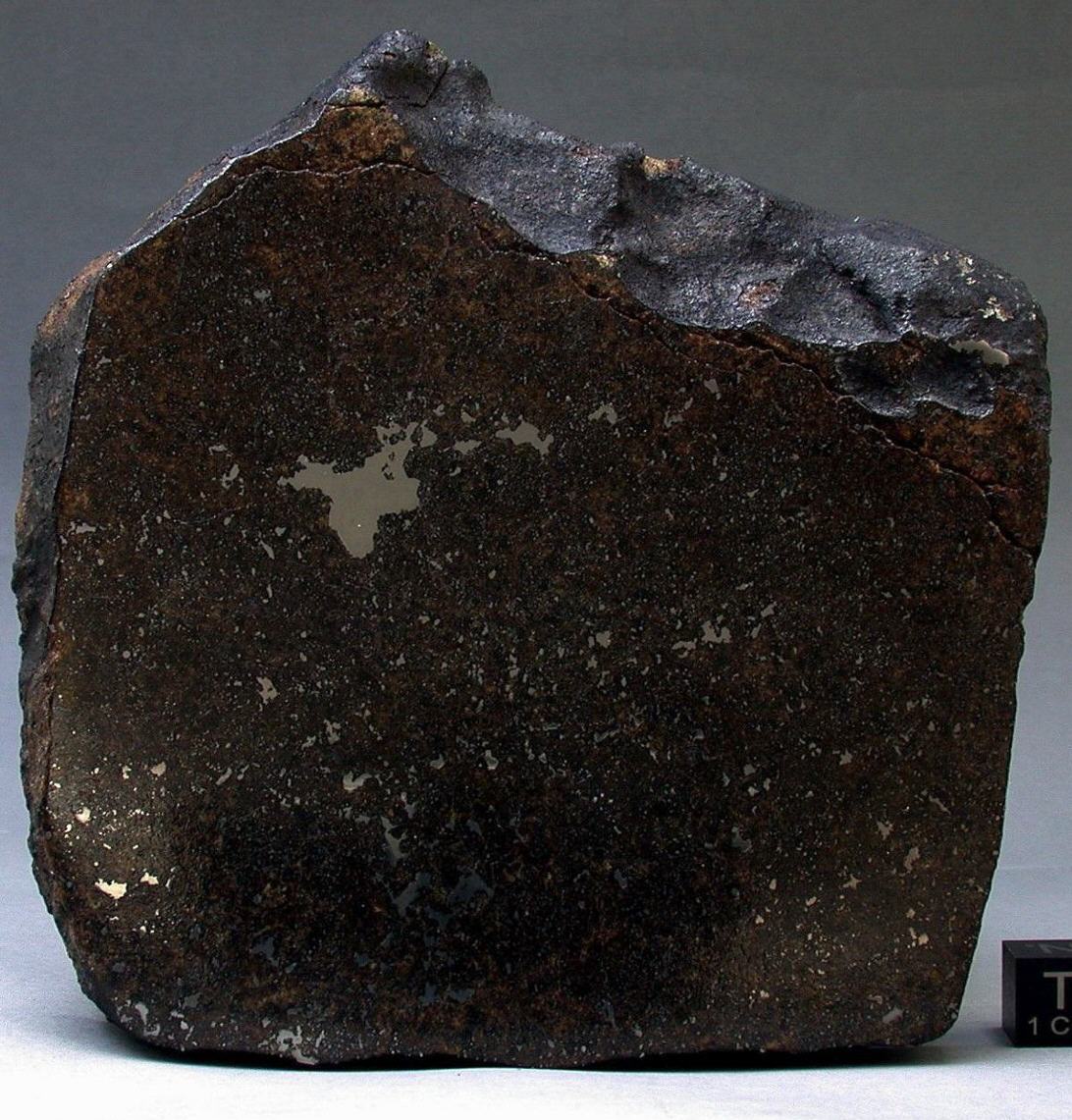
Te-1 was reported to have a CRE age of ~45 m.y., although the CRE age ascertained for Tafassasset is ~76 m.y. See the Tafassasset page for updated information about this meteorite. The specimen shown above is a 1.72 g partial slice with fresh fusion crust on one end, acquired in 2001 from Norbert Classen. The top photo below shows the main mass of Te-1 with an end slice removed. At the bottom are two different lighting angles for a thick slab of Te-1, shown courtesy of Stephan Kambach.
click on photos for a magnified view
Photos courtesy of Stephan Kambach